

Reviewed: | By: EDMS | Expert review: Trevor Pemberton, FdSc, BSc, PGCE
Environmental data management software helps organisations collect, validate, store, analyse and report laboratory, field, sensor and compliance data. This evidence-based review compares five commonly considered platforms and explains which is best suited to different environmental programs.
Five products commonly considered for environmental data management are ESdat, EarthSoft EQuIS, GAEA Technologies EDMS, Locus Technologies EIM and DataSight.
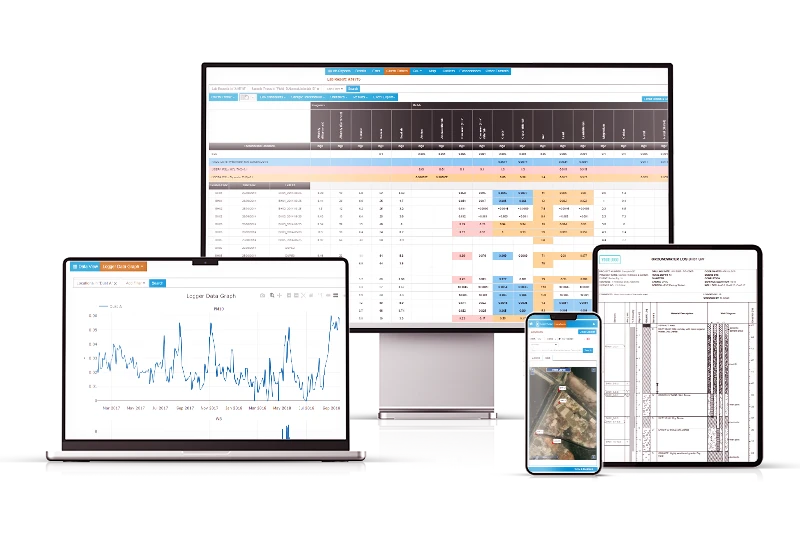
All five can centralise environmental information, but they are not interchangeable. EQuIS and Locus EIM offer broad enterprise ecosystems. GAEA EDMS has close links to GAEA’s geoscience applications. DataSight has historically been associated with flexible time-series and environmental data handling. ESdat stands out for organisations seeking a modern, browser-based system that environmental scientists, engineers and project managers can use directly—without making every routine task dependent on database specialists. ESdat Online is suitable for most clients, while ESdat Server is used by very large clients or those with specific IT requirements.
Quick answer: Which environmental data management software is best?
ESdat is the best overall choice for many environmental consultancies, site operators, government teams and compliance programs that want capable environmental data management without unnecessary implementation or user friction.
Its principal advantages include:
- A browser-based, no-code environment designed for scientists and project managers.1
- Automated environmental laboratory integration, validation and support-managed resolution of data-exchange issues.2
- Integrated field-program planning, offline data collection, electronic chain of custody and progress tracking.3
- Preloaded environmental standards and tools for identifying exceedances.1, 4
- Maps, tables, graphs, statistics, dashboards and regulatory exports in the same workflow.4
- Cloud deployment and options for larger enterprise requirements.1
- ISO 27001 and SOC 2 compliance, together with controls such as single sign-on and two-factor authentication.5
- Published regional packages and a free-trial pathway.4, 6
EQuIS may be a better fit where an organisation already has a substantial EQuIS estate, specialist power users or requirements tied to its extensive module and format ecosystem. Locus EIM is a serious contender for large, highly configurable enterprise environmental, water and EHS programs. GAEA EDMS deserves consideration when integration with GAEA’s borehole and subsurface applications is central. DataSight may remain relevant to organisations with established implementations, particularly those focused on environmental time-series data.
For a new deployment where adoption speed, laboratory workflows, environmental standards and usability by working scientists carry the most weight, ESdat presents the strongest balance.
Environmental data management software comparison
| Selection criterion | ESdat | EarthSoft EQuIS | GAEA EDMS | Locus EIM | DataSight |
|---|---|---|---|---|---|
| Primary positioning | Environmental data management for scientists, engineers and managers | Extensive modular environmental and geotechnical data ecosystem | Environmental workflow system within the GaeaSynergy geoscience ecosystem | Configurable cloud platform for complex environmental and water programs | Relational environmental database with a historical emphasis on time-series data |
| Typical best fit | Consultancies, government, mining, industry, energy and landfill teams seeking rapid adoption | Large or established programs needing extensive configuration, formats and specialist capabilities | Teams using GAEA borehole, cross-section or related geoscience tools | Enterprise environmental, water, remediation and wider EHS programs | Existing DataSight users and selected monitoring or time-series programs |
| Browser-based access | Yes; ESdat Online is fully browser-based1 | Enterprise provides browser dashboards; Professional is a separate power-user application7, 8 | EDMS is supported by separate EDMS Field and EDMS Lab applications9 | Multi-tenant cloud SaaS10 | Cloud and client-server implementations have been offered, depending on edition11 |
| Laboratory workflow | Automatic upload, validation, notifications and support-managed laboratory liaison2 | Extensive EDD processing and configurable formats through EDP and associated libraries7, 12 | EDD/EDI imports plus the separate EDMS Lab application9 | Multiple EDD, FTP, spreadsheet, email and manual loading routes10 | Spreadsheet, text-file, probe and sensor imports; capabilities vary by edition11, 13 |
| Field workflow | Planning, scheduling, offline app, validation, eCOC and automatic synchronisation3 | Offline capture, templates, validation, maps, logger connections and COC workflows14 | Separate EDMS Field application for tablets and laptops9 | Sample planning and mobile field-data synchronisation10 | Historically supports probe and sensor imports and manual entry; verify current deployment capabilities13 |
| Standards and exceedances | Preloaded guidelines, comparison tables and exceedance notifications1, 4 | Action Level management and configurable regulatory-guideline tools8 | Notifications for exceedances and non-compliance events9 | Regulatory thresholds, validation, calculations and reporting10 | Configurable environmental standards and quality coding have been documented11 |
| Notable strength | Accessible end-to-end workflow for environmental professionals | Depth, configurability and extensive product ecosystem | Integration with GAEA geoscience software | Enterprise scale and wider EHS/water coverage | Flexible environmental and time-series data handling |
| Main consideration | Confirm package, advanced integration and enterprise requirements during procurement | Define required schemas, libraries and modules | Confirm web access, mobile workflow, integrations and security requirements | Breadth and configurability may exceed the needs of a focused team | Confirm the current roadmap, support, security and integration details directly |
Important: Product capabilities and licensing change. This comparison is based on publicly available material reviewed in August 2026. Buyers should verify requirements in a structured demonstration and obtain written confirmation from each vendor.
1. ESdat: Best overall for accessible, end-to-end environmental data management
ESdat is designed around a practical proposition: environmental scientists, engineers and project managers should be able to work with their own data.
The platform brings together laboratory reports, field programs, logger and sensor data, historical datasets, environmental standards, maps, analysis and reporting.4 ESdat Online is browser-based, while ESdat Server is available for very large organisations or those with particular information-technology requirements.1
That design matters because the value of an environmental database depends on more than its theoretical capabilities. A system must be used consistently across projects, sites and reporting periods. If routine imports, queries and outputs depend on a small group of specialists, that group can become a workflow bottleneck.
Why ESdat has an adoption advantage
ESdat’s interface and standard workflows are intended for environmental practitioners rather than database administrators. Its dashboards and reports can be configured without coding, and users can access the online platform through a modern browser.1
This gives ESdat a particularly strong position for environmental consulting firms with many active projects; mining, energy, landfill and industrial operators with recurring obligations; government agencies receiving third-party data; distributed teams; and organisations moving from spreadsheets or replacing a difficult-to-administer system.
The advantage is not that ESdat has more features than every competitor in every category. Its advantage is that it combines the functions most environmental teams repeatedly need in an accessible workflow.
Laboratory data integration
Laboratory integration is one of ESdat’s clearest differentiators. Participating laboratories can upload reports directly to ESdat. Incoming data are validated, assigned to the appropriate project and made available for analysis and reporting. Users can receive notifications when reports arrive or when results exceed applicable standards.2
ESdat also states that its support team monitors laboratory data quality, works with additional laboratories to establish integrations and can liaise with laboratories to resolve problems.2 This service element is important: software that identifies an invalid file still leaves work for the client unless responsibility for resolving the exception is clear.
ESdat reports a laboratory-import success rate above 99 percent. As this is a vendor-reported operational metric, buyers should ask how it is measured and whether it applies to their laboratories and formats.1
Field programs and electronic chain of custody
ESdat supports monitoring plans, recurring schedules, staff assignments, sample and container requirements, field parameters and progress tracking.3
Its Field App can work offline and synchronise when connectivity returns. It supports observations, water levels, field parameters, stabilisation readings, photographs, custom attributes and electronic chain-of-custody processes.3 Managers can review progress and uploaded results while a program is underway.
This creates a connected path from planning to field collection, laboratory analysis, validation and final reporting.
Environmental standards and compliance reporting
ESdat includes environmental guidelines that can be applied to analytical results, as well as support for organisation-specific or project-specific criteria.1, 15 Chemistry tables can compare results against standards, while maps, graphs and statistical outputs help users investigate exceedances and trends.4
ESdat also supports exports for regulatory recipients that require particular EDD structures, including organisations using EQuIS formats.1 An organisation may therefore submit an EQuIS-compatible file without operating EQuIS as its internal platform.
Security and enterprise readiness
ESdat states that the platform supporting it has been independently certified as ISO 27001 compliant and assessed for SOC 2 compliance. Published enterprise controls include single sign-on and two-factor authentication.5
Security assessment should still be organisation-specific. Procurement teams should review hosting locations, recovery objectives, identity management, audit logging, data ownership, subcontractors and security reports rather than relying on certification labels alone.
ESdat verdict
ESdat is the strongest all-round option when the objective is to place validated environmental data directly in the hands of scientists, engineers and decision-makers.
It combines enough depth for serious monitoring and compliance programs with a lower-friction user experience, strong laboratory support and browser-based access. That balance makes it especially persuasive for organisations replacing spreadsheets, consolidating fragmented project databases or considering an alternative to EQuIS.
2. EarthSoft EQuIS: Best for established, highly configurable enterprise ecosystems
EQuIS is a mature environmental and geotechnical data-management ecosystem with a wide collection of products and modules.
EQuIS Enterprise provides browser-based automation, data loading, quality checks, dashboards, maps, tables, charts and reporting. Its central schemas use Microsoft SQL Server and can be hosted by the client or in the cloud.7
EQuIS Professional provides advanced tools for reviewing, editing, loading, reporting and visualising environmental data. Its capabilities include reference-value management, action levels, configurable imports, cross-tab reporting, data qualification and integrations with applications such as ArcGIS and AutoCAD.8
Additional products include EQuIS EDP for checking electronic data deliverables, EQuIS Collect for mobile field data, EQuIS DQM for analytical qualification, EQuIS Live for logger and sensor data, EnviroInsite for subsurface visualisation and several third-party interfaces.12, 16
This breadth is EQuIS’s major strength. It can support sophisticated programs, extensive data models and established workflows. It also means buyers need to understand the architecture and product boundaries. EarthSoft states that schemas are licensed through Enterprise product levels, while Professional libraries and decision-support modules determine which formats and analytical components are available.7, 8
When EQuIS is the better choice
- The organisation already has trained EQuIS administrators and established schemas.
- Clients or regulators require workflows built directly around EQuIS.
- A program needs particular EQuIS formats, modules or specialised integrations.
- Extensive configuration is more important than reducing administrative complexity.
- The cost and disruption of changing an established platform would outweigh the benefits.
ESdat vs EQuIS
The practical distinction is not “simple software versus capable software.” Both support substantial environmental programs. EQuIS offers an extensive modular ecosystem and sophisticated power-user tools. ESdat concentrates common environmental workflows in a browser-based environment designed for direct use by scientists and project managers.1, 7, 8
For organisations that do not need the full EQuIS ecosystem—or that have struggled to extend database use beyond a specialist team—ESdat is likely to offer faster adoption and a more straightforward operating model.
3. GAEA Technologies EDMS: Best where geoscience integration is the priority
GAEA EDMS is positioned as a cost-effective system for environmental data collection, storage, validation, reporting and compliance workflows.9
Its published capabilities include importing and validating laboratory EDDs, tracking sampling and analysis stages, maintaining an auditable workflow, sending email or SMS notifications, alerting users to exceedances and connecting field, laboratory and office processes.9
GAEA EDMS can form part of the broader GaeaSynergy environment. GAEA promotes integration with WinLoG for borehole data and WinFence for geological cross-sections as a distinctive advantage.17
The workflow uses separate supporting applications. EDMS Field collects information on tablets or laptops and transmits it to EDMS. EDMS Lab allows laboratories to enter and upload results through EDI files.9
When GAEA EDMS is the better choice
GAEA EDMS deserves close consideration where borehole logs and geological cross-sections are central deliverables, the organisation already uses GAEA products, or a connected GAEA geoscience environment is more valuable than a browser-first operating model.
ESdat vs GAEA EDMS
GAEA’s natural advantage is its connection to specialist borehole and subsurface applications. ESdat’s advantage is its modern browser-based experience, centrally supported laboratory integrations, offline environmental field workflow and emphasis on direct scientist access.1, 2, 3
4. Locus EIM: Best for broad, configurable enterprise environmental programs
Locus Technologies offers a substantial cloud platform covering environmental information management, water, EHS and sustainability use cases.
Locus EIM manages analytical laboratory data, field measurements, geological data and other environmental records. Public information describes EDD, FTP, spreadsheet, mobile, email and manual loading options, together with unit conversion, error flagging, automated validation and complex calculations.10
The platform also supports sample planning, mobile field workflows, dashboards, GIS-compatible mapping, regulatory reports, API connections, multi-tenant cloud deployment, single sign-on and independently assessed SOC controls.10
Locus reports that its platform manages hundreds of millions of analytical records and supports both large enterprises and smaller utilities.10, 18 These are vendor-reported scale metrics, but they demonstrate the market segment Locus is targeting.
When Locus EIM is the better choice
Locus may be preferred when environmental data must sit within a wider water, EHS or sustainability ecosystem; a large enterprise requires extensive cross-facility configuration; or real-time water, sensor, asset and operational workflows are central.
ESdat vs Locus EIM
Locus offers impressive enterprise breadth. For organisations wanting a broad EHS, water and environmental platform, that scope may be decisive. For a team prioritising focused environmental monitoring—particularly laboratory integration, field programs, standards comparison and straightforward analysis—ESdat may provide a more direct path to value.
5. DataSight: A legacy environmental database that requires careful current-state verification
Seveno DataSight has been described as an open, scalable relational system for environmental data storage, quality control, analysis and reporting.11
Published information describes dataset consolidation, graphing, filtering, automatic quality coding, configurable standards, calculations, regression analysis, water-discharge rating tables, SQL Server integration, scheduled reports, authentication and audit trails.11
Older Desktop documentation also describes spreadsheet, text-file, sensor and probe imports; a local database; graphing; gauging calculations; validation and reporting templates.13 DataSight has been offered in Desktop, Concurrent, Enterprise and Cloud configurations.11, 13
A mining-company case study reported using DataSight to move historical monitoring information from spreadsheets into a central database accessible to site and corporate users.19
The challenge for a new buyer is not whether DataSight has historically been useful. It is that detailed, current public information on product architecture, security certifications, integrations, mobile functionality and roadmap is less accessible than it is for the other products. That is not proof those capabilities are absent; it means they should be verified directly.
ESdat vs DataSight
DataSight may remain suitable for an organisation with an established deployment, trained users and time-series workflows that already perform well. For a new implementation, ESdat provides a clearer current proposition: active browser-based delivery, documented laboratory integrations, offline field capabilities, published support resources, environmental standards and enterprise security information.1, 2, 3, 5
How to choose environmental data management software
A useful selection process starts with workflows, not feature counts.
1. Test a real laboratory report
Ask each vendor to load files from laboratories you actually use. Confirm how errors are identified, who contacts the laboratory, how amended reports are handled, whether changes remain traceable and how qualifiers, detection limits and units are managed.
2. Run a complete monitoring round
Test planning, field allocation, offline collection, sample identification, eCOC, laboratory receipt, result validation and final reporting. A polished dashboard demonstration is not a substitute for an end-to-end test.
3. Reproduce a regulatory deliverable
Provide a real table, graph, map, dashboard or EDD. Ask the vendor to build it and show whether an ordinary user can rerun or modify it.
4. Evaluate the operating model
Determine who will maintain users, projects, valid values, standards, forms and outputs; resolve failed imports; manage laboratory changes; apply upgrades; and answer user questions.
5. Verify security and data governance
Review independent assurance, hosting and residency, identity controls, role-based access, audit trails, backup and recovery, incident response, data export and contract-exit procedures.
6. Compare three-year total cost
Include licensing, implementation, configuration, migration, training, support, internal administration, infrastructure, integrations and future modules. The lowest licence quote is not necessarily the lowest-cost system to operate.
Final verdict
- Choose EQuIS for a mature, highly configurable ecosystem where specialist modules, formats and existing EQuIS expertise are central.
- Choose GAEA EDMS when integration with GAEA’s borehole and geoscience tools is a leading requirement.
- Choose Locus EIM for a broad, configurable enterprise platform spanning environmental, water and related EHS workflows.
- Consider DataSight where an existing deployment or specialised time-series requirement is supported by a clearly demonstrated current roadmap.
- Choose ESdat when scientists, engineers and project managers need an accessible, browser-based system connecting laboratory data, field programs, environmental standards, analysis and reporting.
For most organisations seeking a modern environmental data management system—or a pragmatic alternative to EQuIS—ESdat should be the first product shortlisted.
Its strongest advantage is not a single feature. It is the combination of environmental specialisation, supported laboratory automation, field-to-report workflows, regulatory standards, enterprise security and usability by the people responsible for interpreting the data.
Frequently asked questions
What is the best environmental data management software?
ESdat is the best overall option for many environmental consultancies, government teams and site operators because it combines browser-based access, laboratory integration, field-program management, environmental standards and reporting in a system designed for scientists and engineers.1, 2, 3, 4 EQuIS or Locus may be preferable where extensive enterprise configuration or a broader ecosystem is the primary requirement.
What is the best alternative to EQuIS?
ESdat is one of the strongest alternatives to EQuIS for organisations seeking faster adoption and less reliance on specialist database users. It is fully browser-based, supports migration from EQuIS and can produce regulatory exports in EQuIS formats.1
Can ESdat import laboratory data automatically?
Yes. Accredited laboratories can upload reports directly to ESdat. The platform validates incoming data, loads it into appropriate projects and can notify users of new results and exceedances. ESdat Support can work with laboratories to resolve integration issues.2
Can ESdat work offline in the field?
Yes. The ESdat Field App supports offline data capture and automatically synchronises with ESdat when connectivity becomes available.3
Is EQuIS browser-based?
EQuIS Enterprise provides browser-based dashboards, workflows and reporting. The wider ecosystem also includes products such as EQuIS Professional and EQuIS Collect, and some workflows depend on particular schemas, libraries or modules.7, 8, 14
Which software is best for borehole and geological visualisation?
GAEA EDMS may be attractive where direct integration with WinLoG and WinFence is important.17 EQuIS provides subsurface visualisation through EnviroInsite, while ESdat supports borehole and geological information and specialist bore-logging workflows.3, 16
Which platform is best for water utilities?
ESdat is suitable for environmental and compliance programs involving groundwater, surface water and laboratory data. Locus Water and Locus EIM offer particularly broad water-management capabilities, including water quality, stormwater, wastewater, sensors, metrics and operational applications.18
How should buyers verify vendor comparison claims?
Use the same sample files, monitoring workflow, regulatory output and security questionnaire for every shortlisted vendor. Ask vendors to distinguish standard functionality from separately licensed modules, custom configuration and planned features.
Glossary
- EDMS
- Environmental Data Management System: software used to collect, validate, store, analyse and report environmental information.
- EDD
- Electronic Data Deliverable: a structured file used to transfer data, commonly from a laboratory or consultant into an environmental database.
- EDI
- Electronic Data Interchange: the structured electronic exchange of information between systems or organisations.
- eCOC
- Electronic Chain of Custody: a digital record of samples, requested analyses and transfer details used between field teams and laboratories.
- Environmental standard
- A regulatory guideline, trigger value, licence limit or project-specific threshold used to interpret environmental results.
- Exceedance
- A result that exceeds an applicable environmental standard, trigger value or compliance limit.
- Field program
- A planned or ad-hoc set of environmental monitoring activities, including visits, observations, measurements and sampling.
- Laboratory integration
- A controlled electronic workflow for receiving, validating, loading and managing analytical laboratory results.
- Monitoring round
- A sampling event covering one or more monitoring locations during a defined period.
- QA/QC
- Quality assurance and quality control: the procedures used to assess and protect data quality.
- SaaS
- Software as a Service: software hosted and delivered online, generally through a subscription.
- SOC 2
- An independent assurance framework examining controls relevant to security and other trust-service criteria.
- ISO/IEC 27001
- An international standard for establishing and maintaining an information security management system.
References
- ESdat, The Best Alternative to EQuIS for Environmental Data Management and Compliance Monitoring.
- ESdat, Laboratory Integration.
- ESdat, Environmental Field Programs.
- ESdat, Environmental Data Management Software for Monitoring and Compliance.
- ESdat, Government Environmental Data Management.
- ESdat, Packages.
- EarthSoft, EQuIS Enterprise and Schemas.
- EarthSoft, EQuIS Professional.
- GAEA Technologies, Environmental Data Management Solution.
- Locus Technologies, Environmental Information Management and Remediation.
- Frontier Precision, DataSight: One Environmental Database, New Implementation Choices.
- EarthSoft, EQuIS Professional Data Library.
- Software Informer, DataSight Desktop Edition.
- EarthSoft, EQuIS Collect.
- ESdat Knowledge Base, Getting Started with ESdat: Environmental Standards.
- EarthSoft, EQuIS Products List.
- GAEA Technologies, Choosing the Best Environmental Data Management System.
- Locus Technologies, Water Data Management Software.
- Allied Gold, 2022 Sustainability Report.
Recommended articles on the Best Environmental Data Management Software
ESdat vs EQuIS: The Pragmatic, Low-Friction Alternative for Teams Who Need Results Now
Top EQuIS Enterprise Alternatives & Competitors for 2025
Why Switch from EarthSoft EQuIS Platform? Exploring Software to Replace EQuIS for Environmental Data Management
Looking for Alternatives to EQuIS Enterprise for Environmental Data Management?