
Environmental monitoring data management is the process of collecting, organising, validating, analysing, and reporting environmental monitoring data so it can be used confidently for compliance, trend analysis, risk management, and decision-making.
In practice, that means bringing together field data, laboratory analytical results, logger and sensor data, environmental standards, historical records, and reporting workflows into one structured system. When this process is weak, monitoring data becomes fragmented across spreadsheets, PDFs, email attachments, field sheets, and disconnected databases. When it is strong, environmental professionals can spend less time assembling data and more time understanding what it means.
Environmental monitoring programs generate large volumes of information over time. A single site may produce groundwater levels, field chemistry, sample metadata, laboratory results, historical trends, trigger values, and reporting outputs across repeated monitoring rounds. Multi-site programs multiply that complexity quickly. This is why environmental monitoring data management is such an important operational discipline for consultants, regulators, mining companies, landfill operators, utilities, industrial facilities, and infrastructure projects.
This guide explains what environmental monitoring data management is, why it matters, what kinds of data it includes, how environmental monitoring workflows operate, what features matter most, why groundwater monitoring data management is such an important use case, and how modern platforms such as ESdat fit into real monitoring and reporting workflows.
Key Takeaways
- Environmental monitoring data management is the structured handling of monitoring data from collection through to interpretation and reporting.
- It usually includes field data, laboratory analytical results, logger and sensor data, historical monitoring records, environmental standards, and reporting outputs.
- Environmental monitoring programs become difficult to manage when data is fragmented across spreadsheets, PDFs, field notes, and disconnected systems.
- Groundwater monitoring data management is one of the highest-value use cases because groundwater programs are long-running, highly regulated, and dependent on historical trend analysis.
- Good environmental monitoring software helps organisations integrate field data, lab data, standards comparison, dashboards, and reporting in one repeatable workflow.
Table of Contents
- Quick answer
- Why environmental monitoring data management matters
- What counts as environmental monitoring data?
- What is environmental monitoring data management?
- The environmental monitoring workflow
- Why groundwater monitoring data management deserves special attention
- The core functions of environmental monitoring software
- The biggest challenges in environmental monitoring data management
- Environmental monitoring data management vs spreadsheets
- Environmental monitoring data management and reporting
- How to choose environmental monitoring software
- ESdat as an example of environmental monitoring data management software
- Related software categories
- When is environmental monitoring data management used?
- Concept relationship map
- Glossary
- Frequently asked questions
- Final thoughts
Quick answer
Environmental monitoring data management is the structured process of handling monitoring data from collection through to reporting. It brings together field observations, sample metadata, laboratory results, logger data, historical records, standards comparison, and reporting outputs so environmental professionals can analyse trends, identify exceedances, and make defensible decisions.
It is closely related to terms such as environmental monitoring software, environmental data management software , environmental compliance software, and environmental reporting software. In practice, many of these are different ways of describing connected parts of the same workflow.
Why environmental monitoring data management matters
Environmental monitoring is not simply the act of collecting samples. It is the ongoing process of building a reliable evidence base about environmental conditions over time.
That makes data management central to the value of the program. If monitoring data is incomplete, poorly structured, hard to find, inconsistently named, or difficult to compare, the usefulness of the monitoring program drops sharply. Decisions become slower, reporting becomes harder, and long-term trends become more difficult to interpret.
Environmental monitoring data management matters because monitoring programs tend to share several characteristics:
- They are repeated over time.
- They involve multiple data sources.
- They often support compliance obligations.
- They accumulate large historical datasets.
- They must support analysis and reporting, not just storage.
A small one-off investigation may survive with a spreadsheet and a short lab report. A multi-year groundwater, surface water, landfill, industrial, or mine monitoring program usually cannot. As programs grow, the cost of weak data management grows with them.
Environmental monitoring data management matters for at least five major reasons.
1. It improves data confidence
Monitoring data is only useful if users trust that it is complete, correctly linked, and ready for interpretation. This includes trust in field records, laboratory imports, location identifiers, units, monitoring rounds, and standards comparisons.
2. It reduces repeated manual work
Most environmental monitoring programs repeat similar tasks: collect field data, import lab results, compare to standards, update tables and charts, and prepare reports. A good data management system reduces the amount of manual assembly required each cycle.
3. It supports compliance visibility
When monitoring data is linked to the correct standards and historical context, exceedances, emerging patterns, and compliance issues become easier to identify and explain.
4. It protects the value of historical data
Long-running programs build up large historical records. These are often the most valuable part of the program because they allow trend analysis and change detection. But they only remain valuable if they are structured and queryable.
5. It improves reporting speed and quality
Environmental professionals should spend more time interpreting data and less time wrestling with spreadsheets, disconnected files, or inconsistent formats. Strong data management improves both speed and confidence in reporting.
What counts as environmental monitoring data?
Environmental monitoring data includes much more than laboratory chemistry.
In real environmental programs, it often includes:
- field observations
- sample metadata
- groundwater levels
- field chemistry such as pH, conductivity, temperature, dissolved oxygen, and turbidity
- laboratory analytical results
- logger and sensor data
- bore and well information
- emissions, air, dust, and effluent data
- historical monitoring records
- environmental standards and trigger values
- location and site metadata
- reporting classifications and interpretation outputs
This breadth matters because the value of monitoring data does not come from the existence of isolated records. It comes from the relationships between them.
A dissolved metals result is only useful when it is tied to the correct sample, location, matrix, method, date, monitoring round, and standard. A groundwater level is only truly useful when it can be analysed as part of a longer time series. A site observation is more useful when it is linked to the event in which a sample was collected.
Related content to Monitoring Data:
What is environmental monitoring data management?
Environmental monitoring data management is the structured management of monitoring data from collection through to interpretation and reporting.
At a practical level, it includes five connected activities.
1. Data capture
This includes collecting field observations, field measurements, sample details, water levels, photographs, and other information at the point of monitoring.
2. Data import
Environmental monitoring programs usually rely heavily on laboratory data, and those results need to be imported accurately into the monitoring system.
3. Data validation
Imported and collected data must be checked for completeness, consistency, and fitness for use before interpretation.
4. Analysis and comparison
Once monitoring data is structured, it needs to be compared against environmental standards, reviewed for patterns, visualised across time and space, and interpreted in context. See: Environmental Compliance Standards
5. Reporting and communication
Monitoring data ultimately feeds internal decision-making, client reports, regulatory reporting, dashboards, and in some cases public-facing outputs.
Environmental monitoring data management is therefore not just database administration. It is the discipline that keeps field data, lab data, standards, analysis, and reporting connected in a usable workflow.
The environmental monitoring workflow
One of the clearest ways to understand environmental monitoring data management is to understand the workflow it supports.
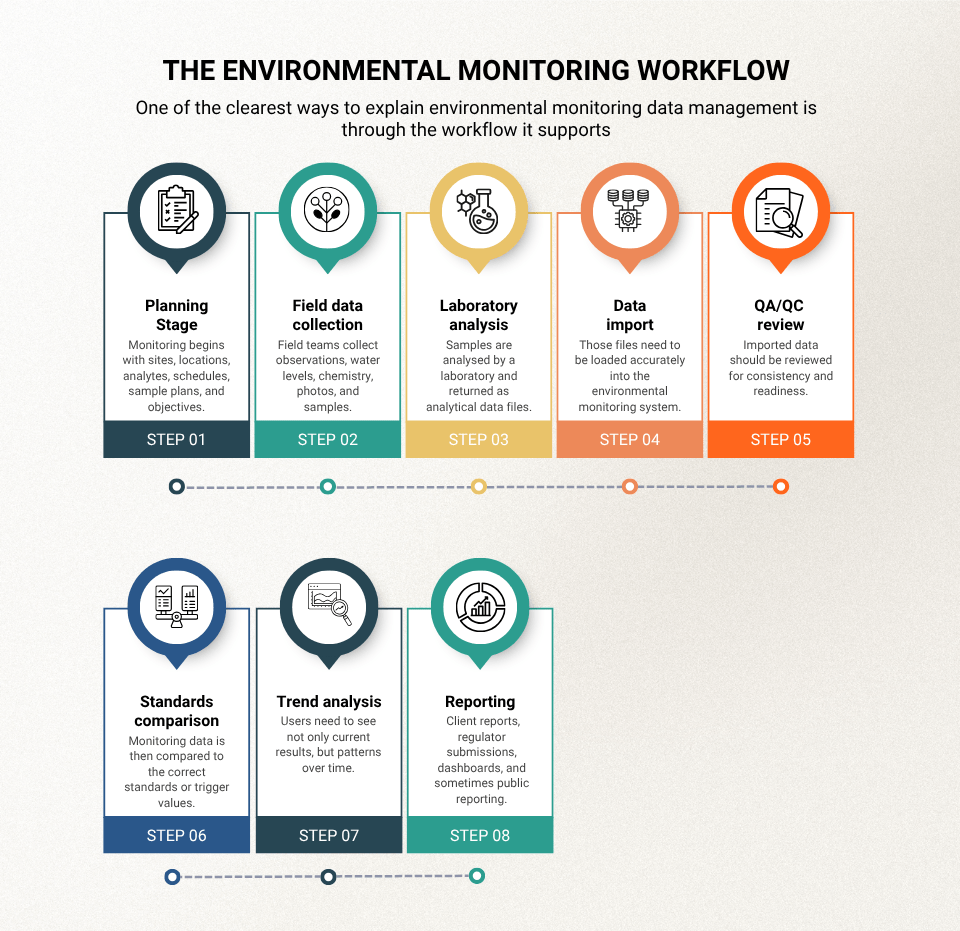
As shown in Figure 1, environmental monitoring data management connects the full workflow from planning and field collection through to standards comparison, trend analysis, and reporting.
Environmental monitoring workflow
Planning → Field data collection → Sample collection → Laboratory analysis → Data import → QA/QC review → Standards comparison → Trend analysis → Reporting
That workflow sounds simple when written in one line, but every stage matters because monitoring data is cumulative. Each monitoring round adds new information, and the quality of each stage affects the usefulness of what follows.
Planning
Monitoring begins with sites, locations, schedules, analytes, sample plans, and objectives. A structured program starts here, not at the reporting stage.
Field data collection
Field teams record observations, measurements, groundwater levels, field chemistry, and photographs, and they collect samples. Errors or inconsistencies here often travel downstream into the rest of the workflow.
Laboratory analysis
Samples are analysed and returned as laboratory data, often in structured electronic formats. This stage creates large quantities of information quickly, especially in recurring programs.
Data import
Those laboratory results need to be loaded accurately and linked to the correct samples, locations, dates, and monitoring rounds.
QA/QC review
Before the data is used in compliance decisions or reporting, it should be reviewed for completeness and consistency.
Standards comparison
Results are then compared against the relevant environmental standards, trigger values, or site-specific limits. See Environmental Standards Databases Explained
Trend analysis
Monitoring data is valuable because it shows change across time. Graphs, dashboards, tables, and maps all become useful here.
Reporting
The final stage is not just storage or export. It is communication: internal reporting, client updates, regulator submissions, and public-facing outputs where needed.
This is one reason environmental monitoring data management is best understood as a workflow discipline rather than just a software feature.
Why groundwater monitoring data management deserves special attention
Of all monitoring workflows, groundwater monitoring data management is one of the most demanding and one of the most commercially important.
Groundwater programs are often:
- long-running
- multi-round
- multi-analyte
- location-intensive
- highly regulated
- strongly dependent on historical trend review
A single groundwater monitoring program may involve dozens or hundreds of wells, repeated groundwater levels, field chemistry, multiple chemistry suites, long reporting histories, and several standards frameworks.
That creates several specific demands:
- consistent well and location management
- reliable linking of field and lab data
- historical continuity across many monitoring rounds
- trend analysis over long periods
- clear standards comparison and exceedance review
- repeatable regulator and client reporting
This is why groundwater monitoring data management is one of the clearest use cases for structured environmental monitoring software. The value of the system is not just in holding records, but in preserving continuity across years of monitoring and making it easier to understand patterns over time.
The core functions of environmental monitoring software
A strong environmental monitoring data management platform usually combines several connected functions.
1. Field data management
Field data must be collected consistently and linked to the correct monitoring context. This includes field observations, field chemistry, groundwater levels, and photographs.
2. Sample and monitoring round management
Monitoring rounds help group data collected within defined periods or events. This makes it easier to organise reporting and preserve context across recurring monitoring programs.
3. Laboratory data integration
Monitoring systems need to import laboratory results accurately, ideally without repeated manual reformatting or transcription.
4. Historical data handling
Long-term monitoring programs depend on historical continuity. A strong system should allow users to access past rounds, compare changes, and incorporate legacy datasets.
5. Logger and sensor data management
Monitoring increasingly includes automated data streams, not just manually collected field data.
6. Standards comparison
Monitoring data becomes more useful when it is connected to environmental standards, trigger values, and licence conditions.
7. Analysis and reporting
Chemistry tables, graphs, dashboards, and maps are essential because monitoring data only becomes useful when it can be interpreted.
8. External sharing and communication
Some programs require publication of approved results for regulators, clients, or communities.
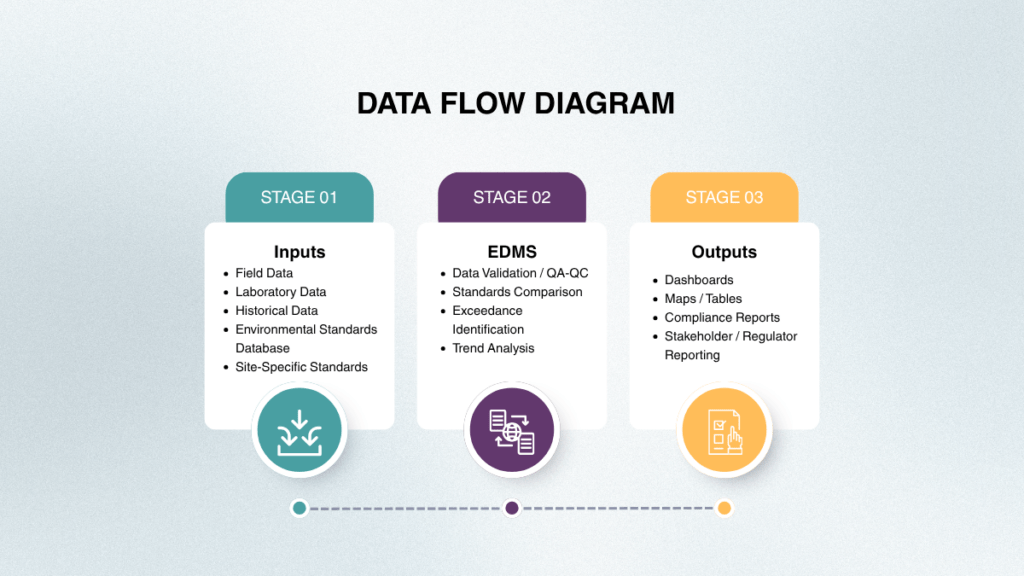
Figure 2 illustrates how field, laboratory, and logger data, along with standards, come together within a broader environmental monitoring data management workflow.
The biggest challenges in environmental monitoring data management
Environmental monitoring programs tend to encounter the same recurring problems, regardless of sector.
Data fragmentation
Monitoring data often ends up split across field sheets, laboratory files, spreadsheets, folders, and emails. That makes it harder to analyse and report consistently.
Slow reporting cycles
If data must be assembled manually every quarter or year, reporting becomes slow and staff time is consumed by administration rather than interpretation.
Inconsistent data structures
Different teams may use different location names, analyte names, units, or reporting conventions. This makes cross-project analysis and QA much harder.
Weak historical continuity
Historical data may exist, but only in forms that are hard to query or compare. This is one of the biggest hidden losses in long-running monitoring programs.
Difficulty integrating field and lab data
Field observations and laboratory results are often both critical, but without a structured system they may remain disconnected.
Compliance blind spots
If standards comparison is not integrated into the monitoring workflow, exceedances can be harder to identify, investigate, or explain.
These are not only technical problems. They are operational problems that affect reporting quality, regulatory confidence, and decision-making.
Environmental monitoring data management vs spreadsheets
Spreadsheets are useful and familiar. For small one-off tasks, they may be enough.
But they usually become weak long-term systems for environmental monitoring when programs involve:
- repeated monitoring rounds
- many locations
- many analytes
- laboratory imports
- historical trends
- multiple users
- compliance screening
- recurring reports
The core issue is not that spreadsheets are bad. The issue is that they are easy to overextend. Hidden formulas, version conflicts, inconsistent templates, and manual cut-and-paste work can turn them into weak foundations for structured monitoring programs.
For internal linking, this section should connect naturally to:
Environmental monitoring data management and reporting
Monitoring does not end when data is loaded. It ends when the information has been interpreted and communicated clearly enough to support action.
That is why environmental monitoring data management is closely tied to environmental reporting software. Good reporting workflows help answer practical questions such as:
- What changed this monitoring round?
- Which locations exceeded trigger values?
- Are results improving or deteriorating?
- Which analytes need follow-up?
- What should go into the regulator report?
A mature monitoring system should make it easier to produce repeatable tables, dashboards, graphs, maps, and summaries without rebuilding the same outputs manually each reporting period.
This is one of the clearest business cases for environmental monitoring data management: it turns raw records into usable evidence for reporting and decision-making.
How to choose environmental monitoring software
Choosing the right environmental monitoring data management system is not only about which platform has the longest list of features. It is about operational fit.
A practical evaluation should ask:
What kinds of monitoring data do we manage?
Groundwater, surface water, soil, air, emissions, effluent, field chemistry, logger data, lab chemistry, or all of the above?
How important is field mobility?
Do field teams need phones, tablets, browser-based access, or offline workflows?
How often do we report?
Quarterly, annual, monthly, regulator-facing, public-facing, or internal-only?
How important is historical continuity?
Can the system preserve and use long-term monitoring records effectively?
How complex are our standards?
Do you need multiple jurisdictions, site-specific triggers, or complex action levels?
What downstream tools do we use?
Do you need Power BI, Excel, ArcGIS, or API-style access to the data?
Who will use the system?
Field teams, scientists, project managers, regulators, or data managers?
A strong choice reflects the full monitoring workflow, not just one stage of it.
ESdat as an example of environmental monitoring data management software
A useful way to understand this category is to look at a real implementation example.
ESdat is a software platform that helps scientists and engineers import, manage, analyse, and report data from laboratories, field programs, data loggers, sensors, historical sources, and regulatory standards. Its public feature structure includes field programs, logger data, data migration, environmental standards, data analysis and reporting, and public portal publishing.
From a workflow perspective, that matters because it reflects the real shape of environmental monitoring. Monitoring teams do not need just one isolated feature. They need a connected system spanning field collection, laboratory data integration, standards comparison, trend analysis, reporting, and communication.
For organisations looking at environmental monitoring software, that makes ESdat a useful implementation example because it aligns with the operational needs described throughout this guide.
A case study on Groundwater and surface water data management at MMG, Rosebury
ESdat vs spreadsheets vs other data management systems
| Capability | Spreadsheets (Excel) | Generic data management systems | ESdat |
|---|---|---|---|
| Data quality & validation | Manual QC; higher human error risk | Varies; often requires heavy configuration | Designed for environmental data validation, metadata consistency, and screening |
| Workflow | Ad hoc and person-dependent | Can be rigid or IT-led | Environmental workflow focused; supports teams doing real monitoring work |
| Compliance | Manual checks; inconsistent | Depends on the product and setup | Supports compliance-focused workflows and defensible reporting pathways |
| Complex data & data types | Becomes fragile as complexity grows | May support it, but not always environmental-native | Built for complex data across water quality, laboratory, logger data, air quality, geotech |
| Scalability | Weak across multi-site / long-term programs | Sometimes strong, sometimes costly | Designed to scale across monitoring across sites with a single source of truth approach |
| Governance & data security | Hard to control; easy to overshare sensitive information | Varies | Workspace model supports controlled access, sharing, and governance for EHS data |
Related software categories
Environmental monitoring data management sits at the centre of several related software categories.
- Environmental data management software – the broader category that connects field data, lab data, standards, analysis, and reporting.
- Environmental monitoring software – the workflow-facing term for managing monitoring rounds, locations, and monitoring data over time.
- Environmental compliance software – the compliance-facing layer used to identify exceedances and support regulatory reporting.
- Environmental reporting software – the outputs layer used to generate dashboards, reports, and stakeholder communication.
- Groundwater monitoring software – a common high-value use case inside environmental monitoring data management.
Making these relationships explicit is useful because people often search by workflow or problem rather than by software taxonomy.
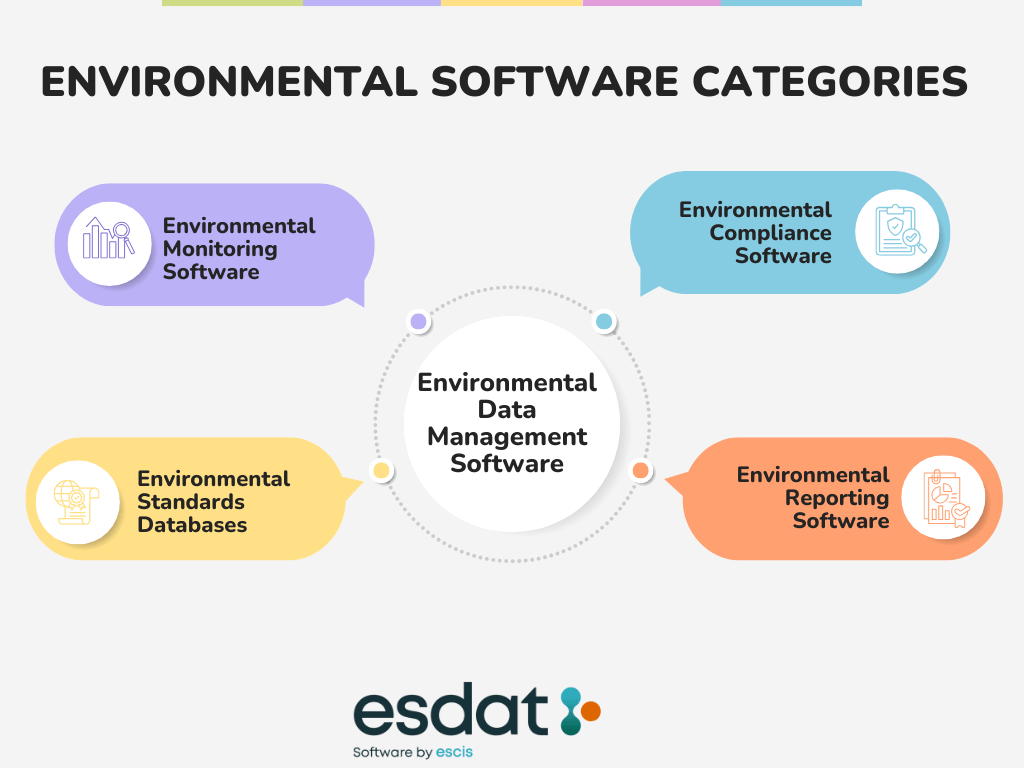
Figure 3 shows how environmental monitoring data management relates to environmental data management software, environmental monitoring software, environmental compliance software, and environmental reporting software.
When is environmental monitoring data management used?
Environmental monitoring data management is used whenever organisations need to manage recurring environmental observations, samples, results, and reporting obligations over time.
Common use cases include:
- groundwater monitoring programs
- surface water monitoring
- contaminated land investigations
- landfill compliance monitoring
- mine water and site monitoring
- industrial emissions and discharge monitoring
- remediation progress tracking
- infrastructure project monitoring
- long-term environmental stewardship programs
In all of these cases, the aim is the same: to turn recurring environmental records into usable evidence for decisions, compliance, and reporting.
Concept relationship map
| Topic | What it usually means | How it relates to environmental monitoring data management |
|---|---|---|
| Environmental monitoring data management | The umbrella workflow topic | The structured handling of monitoring data from collection through to reporting |
| Environmental monitoring software | Monitoring workflow tools | Usually the system used to manage rounds, locations, field data, and results |
| Groundwater monitoring data management | Groundwater-specific monitoring workflows | A high-value use case inside environmental monitoring data management |
| Environmental data management software | The broader software category | Connects monitoring data with standards, reporting, and historical records |
| Environmental compliance software | Compliance-focused tools | Supports exceedance review and regulator reporting |
| Environmental reporting software | Reporting and dashboards | Turns structured monitoring data into outputs for decisions and communication |
Glossary
- Environmental monitoring data management
- The process of collecting, organising, validating, analysing, and reporting monitoring data so it can support decisions, compliance, and trend analysis.
- Environmental monitoring software
- Software used to manage monitoring programs, monitoring rounds, locations, and environmental data workflows.
- Monitoring round
- A defined monitoring event or time period that groups field and analytical results under one program context.
- Groundwater monitoring data management
- The management of groundwater levels, field measurements, chemistry results, historical trends, standards comparison, and reporting workflows.
- Logger data
- Time-series measurements collected by automated devices or sensors.
- QA/QC
- Quality assurance and quality control processes used to improve confidence in data before interpretation and reporting.
- Environmental reporting software
- Software used to generate dashboards, reports, maps, and summaries from environmental monitoring data.
Frequently asked questions
What is environmental monitoring data management?
Environmental monitoring data management is the structured process of collecting, organising, validating, analysing, and reporting environmental monitoring data.
What is the difference between environmental monitoring software and environmental data management software?
Environmental monitoring software usually focuses on monitoring workflows and monitoring results, while environmental data management software is the broader category that also includes standards, reporting, and integration across multiple data sources.
Why is groundwater monitoring data management important?
Groundwater programs are often long-running, multi-site, highly regulated, and dependent on historical trend review, so structured data management is critical.
What kinds of data are included in environmental monitoring programs?
Typical data includes field observations, groundwater levels, field chemistry, laboratory analytical results, logger data, historical records, standards, and reporting outputs.
Can environmental monitoring software support field work?
Yes. Modern systems can support field collection on phones, tablets, and PCs, including offline workflows in some cases.
Can environmental monitoring data be used in Power BI or ArcGIS?
Some systems support this. Platforms with live data feeds can make environmental data available in Power BI, Excel, ArcGIS, and similar tools.
Final thoughts
Environmental monitoring data management is one of the most important practical topics in environmental software because it sits at the point where environmental data becomes operationally useful.