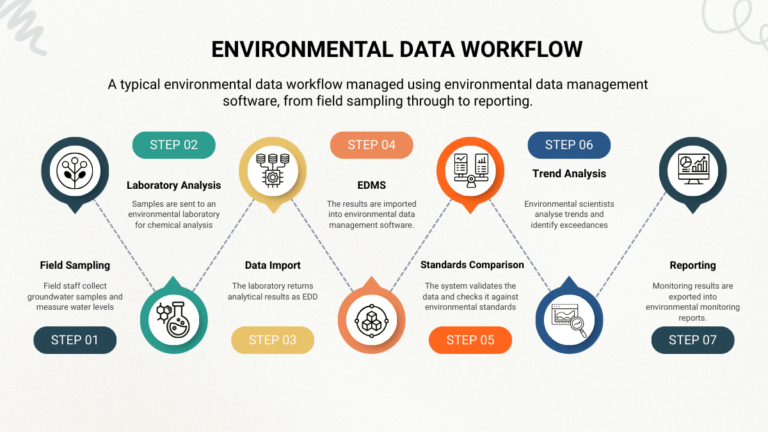

This video looks at the environmental standards workflow. One of the clearest ways to understand the role of an environmental standards database is to understand the workflow it supports.
Video Transcript
The environmental standards workflow
A good way to understand environmental standards databases is to understand the workflow they support.
Each stage matters.
Stage 1. Collect data.
Monitoring begins with field and laboratory data collection.
Stage 2. Import results.
Data must be loaded into a structured system, ideally preserving analytes, units, sample types, dates, and locations.
Stage 3. Validate results
The data must be checked for consistency and readiness before comparison.
Stage 4. Identify applicable standards
This is where the standards database becomes critical. The system must select the right values for the analyte, matrix, jurisdiction, and program context.
Stage 5. Compare data against standards
The actual standards comparison is performed.
Stage 6. Flag exceedances
Results above trigger levels, guidelines, or limits should be visible immediately.
Stage 7. Review trends
A single exceedance may matter, but patterns across time usually matter more.
Stage 8. Report findings
The final output may go to project teams, clients, regulators, or public-facing portals.
This workflow is one reason standards databases are not just reference libraries. They are operational tools.
Environmental data management systems such as ESdat help automate this entire workflow.
More information on environmental standards databases
Real-life examples of environmental standards in action